How to Taste Coffee More Carefully Without Turning It Into a Ceremony
Paying closer attention to coffee does not require a tasting table, a score sheet, or a shelf of equipment. The easiest place to begin is the cup you already drink. A few small changes in attention can make familiar coffee more interesting and can also explain why one brew feels lively while another seems flat.
Start with the cup, not the vocabulary
Before searching for flavor words, notice the obvious things. Is the aroma strong before you sip? Does the coffee feel light and quick on the tongue or heavier and rounder? Does the first impression disappear immediately, or does a pleasant taste remain after you swallow?
These broad observations are more useful than forcing a precise description. “Bright and light” or “soft and chocolatey” is enough. The goal is not to identify every possible note; it is to build a memory of how different cups behave.
Taste it at three temperatures
Very hot coffee hides detail. Take one sip soon after pouring, another when the cup is comfortably warm, and a final one when it has cooled further. You may notice that sweetness becomes clearer, bitterness changes, or a fruit-like note appears only later.
This is especially useful when comparing two beans or two brewing methods. Temperature becomes part of the experience rather than a race to finish the drink while it is hot.
Change one thing at a time
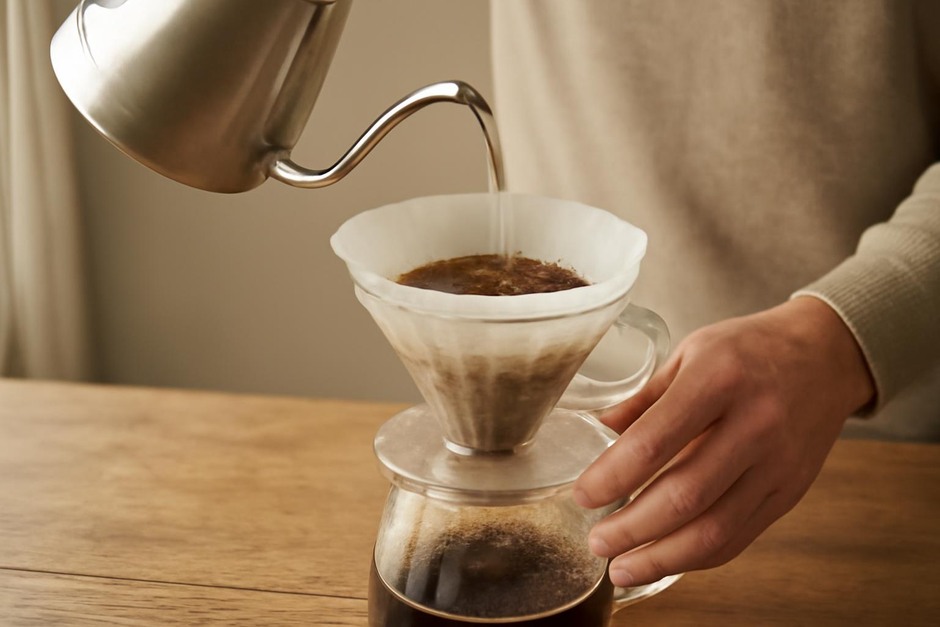
If you brew at home, small experiments teach more than large recipe changes. Keep the coffee and water the same, but grind a little coarser. Or keep the grind the same and use slightly less coffee. When only one variable moves, the result is easier to understand.
You do not need a perfect recipe. A repeatable starting point is enough. Once you know what your usual cup tastes like, even a modest adjustment becomes noticeable.
Keep one line of notes
A useful coffee note can be a single sentence: “sweet when warm, slightly dry at the end,” or “smelled better than it tasted, but had a smooth texture.” Short notes help you remember what you enjoyed without turning breakfast into homework.
Use comparison when you are curious
Comparison is the fastest way to sharpen attention. Make the same coffee in two cups and let one cool longer, or order two small coffees made with different beans. Taste back and forth. Differences that seem vague in isolation often become obvious side by side.
Careful tasting is really a habit of noticing. Once you stop trying to find the “correct” answer, the cup becomes simpler and more interesting at the same time.